
Queue Prioritization Rules for iGaming Player Support
November 16, 2026A customer support runbook is a written procedure that tells an agent exactly what to do for one known situation: what triggers it, what to check, how to fix it and when to hand it on. For a UK-licensed casino or sportsbook, runbooks are what keep a withdrawal query, a KYC hold or a safer-gambling flag handled the same way at 3 a.m. on a Saturday as at 10 a.m. on a Tuesday. This guide shows what to put in them, which UK rules they must reflect, how to prepare them for peak events, and how to check they work before and after launch.
TL;DR
- A runbook covers one repeatable task. A playbook covers a wider situation and points to several runbooks.
- Every entry needs a trigger, ordered diagnostic checks, resolution paths and explicit escalation criteria.
- For UK operators, build ID verification, complaints and safer-gambling handoffs into the runbooks themselves, not into a separate policy nobody opens.
- Prepare for jackpot drops and major tournaments with pre-written macros, surge rules and named owners before volume arrives.
- Test every runbook with someone who did not write it, and review it after each use.
Table of Contents
- What a support runbook is, and how it differs from a playbook
- What every runbook entry should contain
- The runbooks a UK-licensed operator needs first
- From runbook to playbook: escalation design
- Preparing runbooks for major sporting events and jackpot drops
- A support launch checklist for a new casino or sportsbook team
- Owning and maintaining runbooks
- Perspective: what we see in practice
- How to check your runbooks are working
- How Workanova can help
- FAQ
- Sources
What a support runbook is, and how it differs from a playbook
Most pages ranking for this term describe IT operations runbooks. The idea transfers directly to player support. TechTarget defines runbooks as standardised written procedures for completing repetitive processes, focused on a single workflow. It describes a playbook as a broader, overarching response, such as crisis management, which may incorporate several runbooks.
Servantium’s glossary draws the same line by scope. A runbook gives task-level instructions: prerequisites, ordered steps, decision points, failure handling and verification. A playbook guides a class of situation through roles, decisions, escalation and communications.
In a casino or sportsbook, that looks like this:
| Document | Scope | iGaming example |
|---|---|---|
| Runbook | One task or symptom | “Withdrawal pending more than 24 hours” |
| Runbook | One task or symptom | “Player cannot pass document upload” |
| Playbook | A class of situation | “Payment provider outage during a major match” |
The playbook names who decides, who talks to players and who talks to the payments team. Each step that an agent has to perform points to a runbook.
Keep these documents internal. Several support practitioners advise separating internal runbooks from customer-facing knowledge bases, because mixing them leaves agents with watered-down content or players with confusing internal jargon (Hitt Hosting Desk).
What every runbook entry should contain
A well-structured entry has four parts: a trigger (the symptoms), diagnosis steps (ordered checks), resolution paths (step-by-step fixes) and explicit escalation criteria (Supp Blog). Add the pieces below and you have a template.
- Title written as the player’s symptom. Players do not search by internal system name. They describe what they see: “deposit taken but balance not updated”. Symptom-first writing, with the cheapest and most likely checks first, is the approach recommended for game troubleshooting (Viblo).
- Trigger. The exact signals that tell the agent this runbook applies: ticket tags, error messages, player wording.
- Prerequisites. Which back-office permissions, tools and player data the agent needs before starting.
- Diagnosis steps. Numbered, in order, with the expected result of each check.
- Resolution paths. One path per diagnosis outcome. Include what the agent must never do, such as releasing a withdrawal without a completed verification.
- Escalation criteria. A threshold, a destination and a deadline: “If the payment provider shows no status after 30 minutes, escalate to second line with the transaction ID.”
- Player communication. Pre-written macros for acknowledging the issue, giving an update and explaining an escalation (GitHub support-runbook skill).
- Owner and review date. One named person, not a team.
Writing style
The UK Ministry of Justice’s guidance says runbooks should be short and clear, avoid unexplained acronyms, and stay discoverable and accessible to everyone likely to need them (MoJ technical guidance). In support that means one screen per runbook where possible, and a glossary for terms such as EDD, SOW or chargeback. A new agent on a night shift should not need to ask a colleague what a line means.
The runbooks a UK-licensed operator needs first
Start with the contacts that carry the most regulatory and revenue risk. The rules below are for UK-licensed operators. If you also hold licences in Malta, Gibraltar or elsewhere, write separate branches rather than blending the requirements.
Identity verification and KYC
The Gambling Commission requires operators to verify name, address and date of birth before a customer is allowed to gamble. It warns that leaving this late can create friction at the point of withdrawal (UKGC). Your KYC runbook should therefore cover:
- which checks are automatic and which need manual review;
- what the agent can ask a player to upload, and what they must never ask for over chat;
- how to explain a hold to a player without implying a fault;
- the handoff to the compliance or KYC team, with the data they need attached.
Payments
Separate runbooks for deposits, withdrawals and reversals. Each should state which statuses an agent can read, which actions need second-line approval and the point at which a delay becomes an escalation.
Complaints
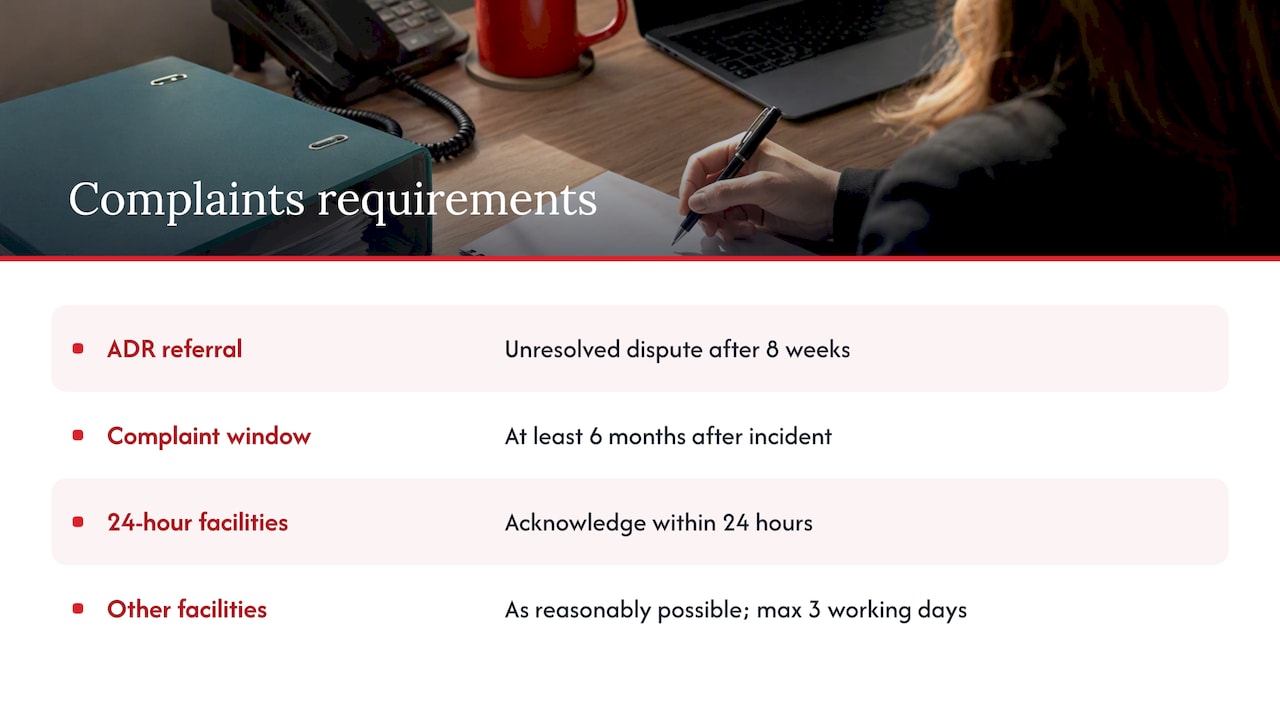
The Commission expects a clear written complaints process and requires that players can take an unresolved dispute to an ADR provider if you have not resolved it within 8 weeks. Its complaints and disputes requirements also say complaints should be possible for at least six months from the incident. They set acknowledgement at 24 hours for 24-hour facilities, and otherwise as soon as reasonably possible and within three working days.
The same Commission blog says live-chat operatives need enough training and information to recognise when a contact should be redirected to the formal complaints procedure. That is a runbook job. Write down the phrases and situations that turn a query into a complaint, and the exact steps that follow.
Safer-gambling contacts
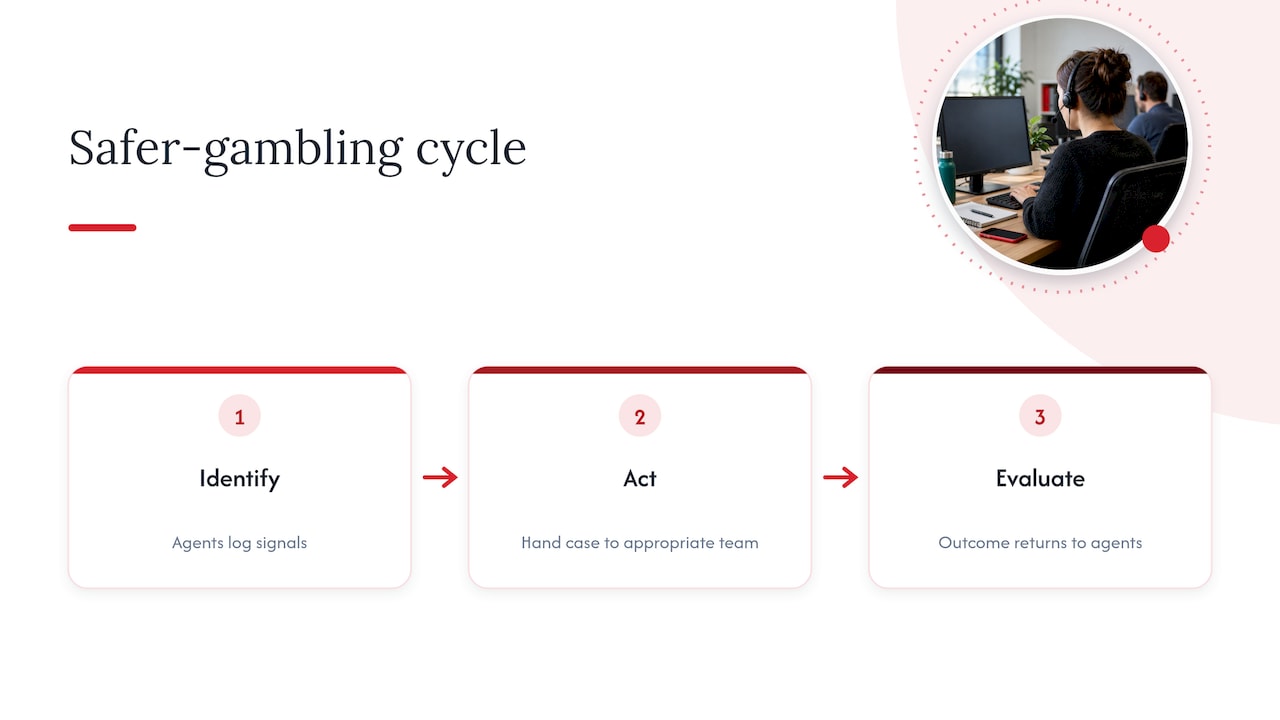
The Commission’s remote customer interaction condition requires systems that embed three elements: identify, act and evaluate. Your runbook should show where agents sit in that cycle: what signals they log, which team they pass the case to, and how the outcome comes back to them. Keep this runbook short, and put the human handoff first.
From runbook to playbook: escalation design
A runbook that ends in “escalate” without saying how is the most common failure. Define three things for every escalation: the criteria, the destination and the information that must travel with the ticket. If you need a model for a dedicated second line, our page on second-line escalation for iGaming operators shows how we structure it.
Then group related runbooks under a playbook for each major scenario: a payment provider outage, a game provider fault, a bonus misconfiguration. The playbook sets roles, decision rights and player communications. The runbooks do the task work.
Preparing runbooks for major sporting events and jackpot drops
Peaks do not create new problems. They multiply the existing ones, and untested runbooks fail first. Preparation for a World Cup, a big race meeting or a promo launch should cover:
- Forecast by contact type. Use your last comparable event to estimate how many deposits, withdrawals, bet-settlement queries and bonus questions to expect per hour, then staff against that.
- Pre-write the macros. Bet settlement delays, odds-suspension questions and promo terms are predictable. Have approved wording ready, reviewed by compliance.
- Add surge rules to each runbook. What changes when volume is three times normal? Which checks can be skipped safely, and which never can? Decide this now, not live.
- Name an incident lead per shift. Include night shifts, which often hold the least experienced agents when the match runs late.
- Run a dry run. Replay a busy hour from past tickets with the agents who will staff it.
If you cannot staff the extra hours internally, this is where a managed team helps. We cover event-specific planning on our World Cup support coverage page, and our approach to round-the-clock cover on the follow-the-sun support page.
A support launch checklist for a new casino or sportsbook team
Whether you launch an in-house team or a managed one, check these before go-live. The iGaming go-live checklists you will find online agree on a core: KYC and AML flows, tested payment transactions and monitoring of launch metrics (iGamingHub). For the support function specifically:
- Runbooks written for the top contact reasons, each with an owner.
- Escalation paths named, with contact details and hours.
- Agents have back-office, payment and CRM access at the right permission level.
- KYC, complaints and safer-gambling runbooks signed off by compliance.
- Macros loaded in the helpdesk and tagged to runbooks.
- Languages covered for every shift, including nights and weekends.
- SLAs written down: first response, resolution and escalation times.
- QA scorecard agreed, with the first calibration session booked.
- Reporting live: volume, first response time, resolution time, reopen rate and escalation rate.
- A rollback plan if a channel fails on day one.
A realistic timeline for a managed team is 4 to 8 weeks from kick-off. Our step-by-step guide to setting up an outsourced team in 4 weeks walks through the stages.
Owning and maintaining runbooks
A runbook that nobody maintains is worse than none, because agents trust it. Engineering practice guidance recommends writing for someone meeting the service under stress, giving each runbook a named owner, version-controlling changes, linking documents directly from alerts and tools, and reviewing after each use (Ragan McGill). Applied to support:
- Link from the ticket. The helpdesk tag should open the runbook. Searching a wiki during a live chat does not work.
- Review after use. If an agent deviated from a runbook, find out why and update it.
- Review on change. New payment method, new game provider, new licence condition or promo mechanic: the affected runbooks get edited the same week.
- Keep one version. Old copies in shared drives are how agents quote last year’s process.
Perspective: what we see in practice
We run dedicated player support teams for licensed operators, and the pattern is consistent. Teams rarely fail because agents lack skill. They fail because the knowledge sits in the heads of two or three senior people, and a jackpot drop or a final on a Sunday night brings volume those people cannot absorb.
Our view is that a runbook is the first thing to write and the last thing to finish. Write the top ten contact reasons before launch, then let live tickets correct them. In the first weeks of a new team, we treat every escalation as a sign that a runbook is missing a step. We also keep QA and runbooks tied together: a QA finding that repeats across agents is almost always a runbook problem, not an agent problem.
Operators who buy support as a managed service should expect the runbooks to be built with them, owned by named people on both sides and delivered under written SLAs.
— Miroslav Maslovarić
How to check your runbooks are working
Published guidance on this is thin, so use measures you can run yourself.
- Cold-read test. Give a runbook to an agent who did not write it and ask them to resolve a staged ticket. Every question they ask is a gap.
- Escalation audit. Sample escalated tickets monthly. Was the escalation within the criteria? Did the ticket carry the data second line needed?
- QA scoring against runbooks. Score tickets on whether the agent followed the documented path and whether the path produced a correct outcome. Our overview of QA for iGaming player support sets out how we approach it.
- Operational metrics. Track first response time, resolution time, reopen rate and escalation rate by contact reason. A rising reopen rate on one reason points to one runbook.
- Compliance sampling. Check complaint acknowledgement times and ID verification handling against the rules above.
- Peak-event drill. Before major events, replay a heavy hour and measure against your SLAs.
If players are already telling you the service is slow, our list of signs your support is hurting revenue will help you pinpoint where to start.
How Workanova can help
We are a Belgrade-based BPO working in EU time zones. We hire, train, equip and launch your own named player support team in 4 to 8 weeks, with 24/7 coverage in 14+ languages across live chat, email and ticketing, VIP support, KYC and payments handling, second-line escalation and QA, all under written SLAs. Current rates are listed on our pricing page. See the pricing page for details.
If you want runbooks, escalation and QA built into a team that is ready for your next peak, talk to us through our iGaming player support page.
FAQ
What is the difference between a runbook and a playbook?
A runbook gives step-by-step instructions for one repeatable task or symptom. A playbook covers a wider situation, such as a payment outage, and sets roles, decisions and communications, often linking to several runbooks. Write runbooks for agents and playbooks for team leads and incident owners.
How many runbooks does a new support team need at launch?
There is no fixed number. Start with your highest-volume contact reasons plus the high-risk ones: KYC, withdrawals, complaints and safer-gambling flags. Ten well-tested runbooks beat fifty untested ones. Add more from live ticket data.
Who should own the runbooks?
Each runbook needs one named owner, usually the team lead or subject specialist for that contact type. Compliance should sign off any runbook that touches regulated processes. Owners review after each use and whenever the underlying process changes.
Can runbooks be shared with players?
Not as they stand. Internal runbooks contain escalation rules, internal tool names and fraud or compliance detail. Turn the player-facing parts into plain-language help articles and keep the runbook itself internal.
Sources
- TechTarget: What is a runbook and what is it used for?
- Servantium: Runbook / Playbook
- Hitt Hosting Desk: Support Runbooks and Playbooks
- Supp Blog: How to Write a Support Runbook for Common Issues
- Viblo: Symptom-First Docs
- GitHub: support-runbook skill
- Ministry of Justice: Documenting how your service is supported
- UKGC: Reminder of identity verification requirements for remote operators
- UKGC: Handling complaints and ADR
- UKGC: Complaints and disputes requirements
- UKGC: LCCP 3.4.3 Remote customer interaction
- iGamingHub: iGaming Go-Live Checklist
- Ragan McGill: Runbooks and Playbooks
Recommended