

Language Coverage Planning for iGaming Player Support
November 26, 2026The IBAS complaint process starts only after your own complaints procedure has ended. The customer then refers the dispute to the Independent Betting Adjudication Service. IBAS checks whether it can hear the case and asks both sides for written submissions. A panel then issues a written ruling. If you hold a UK Gambling Commission licence, you need a support team that can run your stage of this process on time and keep evidence ready for the next one.
This guide walks through the process as a Head of Player Support, CX lead or compliance owner sees it: what you must do before a referral, what IBAS asks of you, how long each stage takes and where operators lose cases.
TL;DR
- IBAS can only look at a dispute once your internal process has finished, or once eight weeks have passed without a resolution.
- After a referral, you must send a full written response within 10 days, signed off by a senior staff member and backed by evidence.
- IBAS rulings are binding on you if the customer accepts them, unless the dispute is worth more than £10,000.
- Most of the work is done before a case reaches IBAS: clear terms, clean ticket records and a consistent final-response letter.
- Peak periods are where deadlines slip, so plan complaint capacity the same way you plan live chat capacity.
Table of Contents
- Where IBAS sits in a UK complaint
- Stage 1: what you must do before IBAS is involved
- When a customer can refer a dispute to IBAS
- The IBAS process step by step
- What your written response must contain
- Timelines at a glance
- Rulings: what binds whom
- Our perspective
- Building a complaints process that rarely reaches IBAS
- How Workanova supports complaint-ready support
- FAQ
- Sources
Where IBAS sits in a UK complaint
The Gambling Commission’s licence conditions and codes of practice require you to handle complaints and disputes in a timely, fair, open and transparent way. If a dispute is not resolved to the customer’s satisfaction within eight weeks, you must arrange for the customer to refer it to an alternative dispute resolution (ADR) entity, provided the customer cooperates in a timely manner. The ADR service must be free of charge to the customer.
IBAS is one of those ADR entities. It can consider domestic and cross-border disputes across remote gambling, betting, bingo, casinos, lotteries and adult gaming centres. Your operator must hold a Gambling Commission licence and be registered with IBAS for it to take your cases.
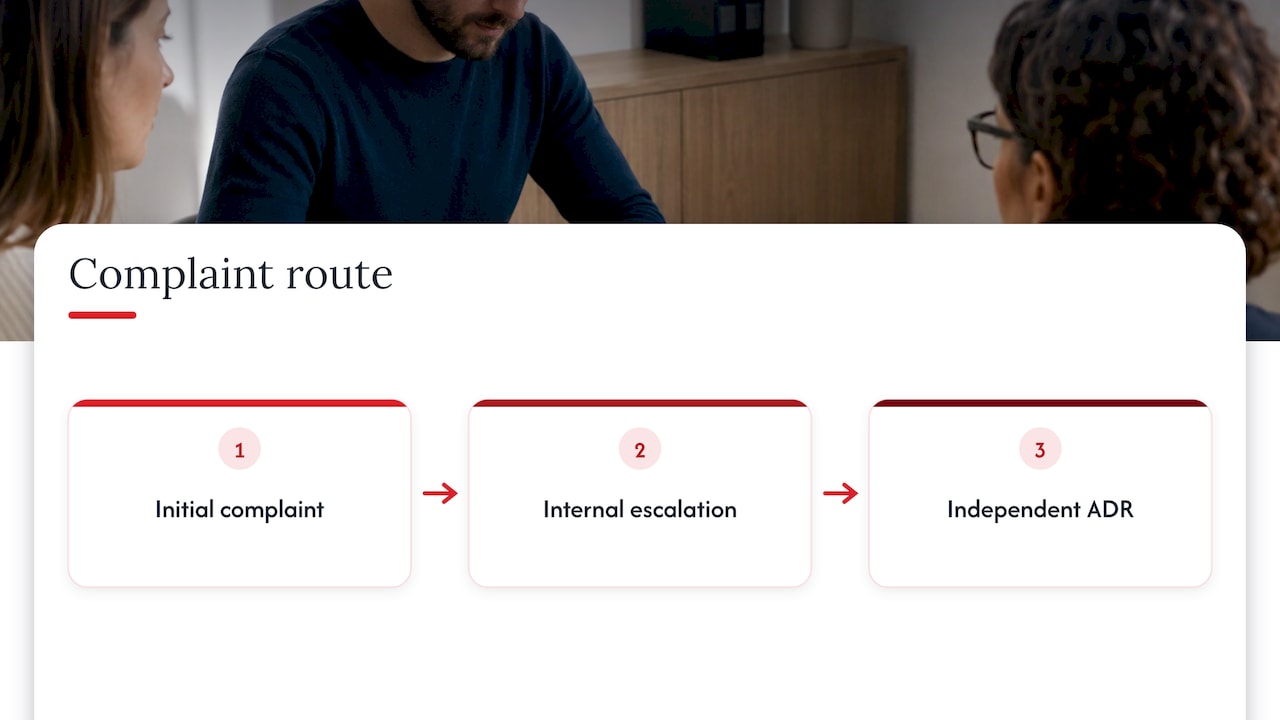
The Commission’s review of licensee practice describes a short, clear three-stage model: the initial complaint, internal escalation and referral to independent ADR. That is the structure to build around.
The volumes are small relative to total contacts but not trivial. The Commission’s strategic assessment recorded around 165,000 consumer complaints logged by licensees in 2019-20, with around 5% of them ending up with an ADR provider.
Stage 1: what you must do before IBAS is involved
The Commission’s complaints guidance sets the sequence for your own process:
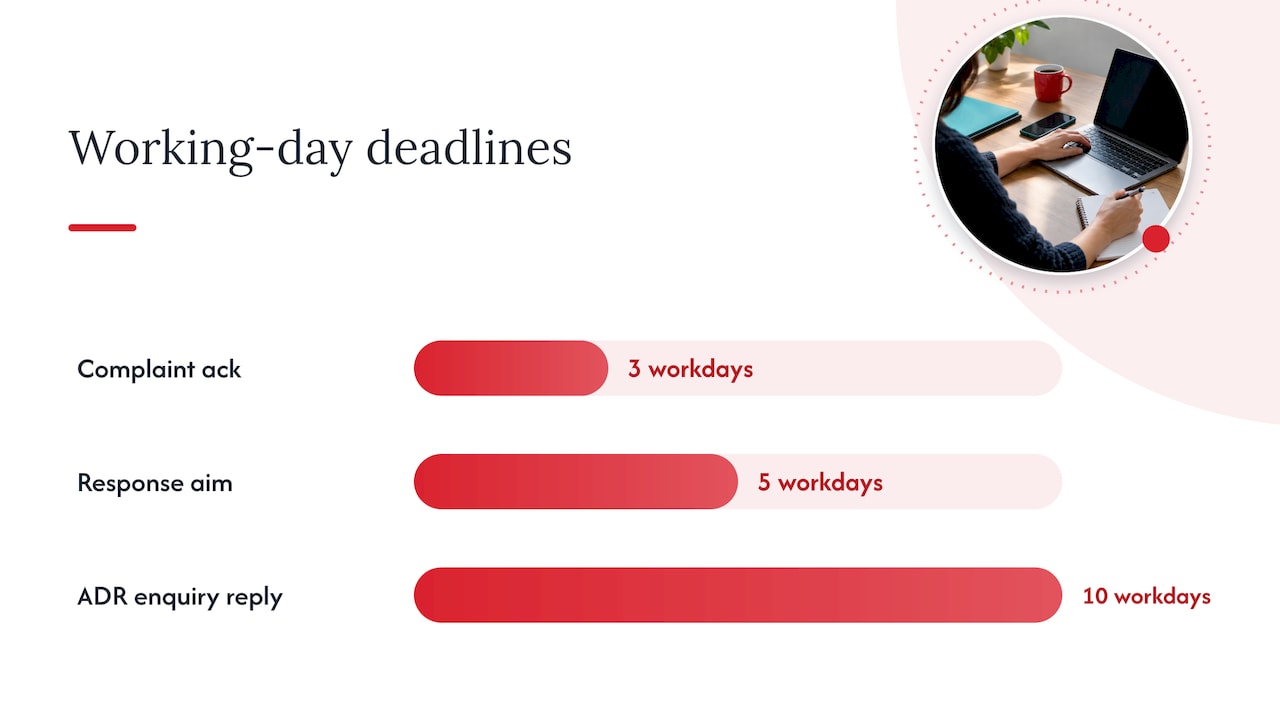
- Acknowledge the complaint within three working days. For 24-hour gambling facilities, acknowledge within 24 hours.
- Investigate and issue a decision.
- Allow internal escalation if the customer is dissatisfied.
- Keep the whole process, including escalation, inside eight weeks from the day you first received the complaint.
- Write to the customer at the end, confirming the final decision, that your process has ended and how to take the matter to an independent ADR provider.
- Respond to ADR-provider enquiries within 10 working days.
The eight-week limit comes from social responsibility code provision 6.1.1.2. The same guidance says you should let customers raise a complaint for at least six months from the date of the incident, and your terms may not stop them doing so in that window.
Many licensees aim well below the maximum. The Commission notes that many aim to respond within 24 hours or five working days. The same page records that IBAS asked for more clarity on the point at which a customer reaches the end of the process without a resolution. That is why the final-response letter matters: if it is vague, the customer does not know they can go to IBAS, and you have a compliance problem.
Two practical points from the same guidance help at this stage. Tell customers what information you need to investigate, because it speeds up the case and prevents delays. And keep the process short: every extra layer is another place for a deadline to slip.
When a customer can refer a dispute to IBAS
Under the IBAS terms of use, a customer may refer a dispute after following your internal procedure and receiving confirmation from a senior manager that it has ended, or when it remains unresolved after eight weeks and the customer has cooperated in a timely manner. IBAS says it can only look at a case after your internal process has finished. It may ask to see your written final decision or a referral code or deadlock number.
IBAS considers disputes about the return anticipated from a bet, game or gambling-account transaction, or about promised credit, where you have not resolved the matter to the customer’s satisfaction. A few conditions apply:
- The transaction is normally subject to the laws of England and Wales or Scotland, although IBAS may accept other jurisdictions.
- The dispute must not be subject to court action, unless a court referred it.
- It must not already have been ruled on by another ADR entity, regulator or court.
- It must not properly be a matter for a regulator or a court.
What IBAS does not cover
IBAS publishes a list of complaints outside its remit. It does not consider claims of irresponsible treatment unless there is a contractual element. It also excludes self-exclusion effectiveness, customer-service standards, fixing or cheating, under-18 gambling, and unprocessed or refused bets and restricted or closed accounts that deny the opportunity to bet. Bets that were accepted and later unfairly cancelled can fall within its remit.
For your agents, this matters at triage. A complaint about a slow chat reply is a service complaint. A complaint about a voided winning bet is a potential IBAS dispute. Tag them differently from the first contact so you can see which ones carry adjudication risk.
The IBAS process step by step
The sequence below follows the IBAS terms of use.
- Referral. The customer refers the dispute. IBAS acknowledges it within three working days and considers whether it can hear it.
- Customer submission. If the dispute is in scope, IBAS asks the customer for a written submission and a completed claim form.
- Your written response. Once the claim form is complete and any queries are clarified, you have 10 days to send a full written response from a senior staff member.
- Further enquiries. IBAS may require more explanations or evidence from either side.
- Panel ruling. When enquiries are complete, the dispute goes to the IBAS Panel. It issues a written ruling, notified to both parties at the same time.
The panel has 15 members with gambling, consumer redress and complaint-handling experience. It reviews disputes on written evidence, your terms and conditions and Gambling Commission requirements.
Not every customer applies online. IBAS reports that it typically receives 5 to 10 requests for ADR by post each week and notes that it is increasingly unusual for operators to offer telephone support. Make sure your final-response letter explains the IBAS route in a way that works for customers who do not use chat.
What your written response must contain
IBAS expects your submission to include:
- Comments or actions from the staff involved.
- Evidence supporting your factual assertions, including relevant computer data where possible.
- The specific terms or rules you rely on, and an explanation of how they apply.
- A systems report, if the dispute involved communication systems or IT and IBAS requests one.
You must also use all reasonable endeavours to keep relevant dispute records and data until the dispute is settled or you have complied with an IBAS ruling (all per the terms of use).
This is where ticket hygiene pays off. If your chat transcripts, email threads, KYC notes and payment records sit in separate systems with inconsistent tags, a 10-day deadline becomes a scramble. A clear internal case file template helps: customer ID, dates, the term relied on, links to transcripts, and the name of the senior reviewer. Our SOP playbook for player support covers the kind of standard procedures that make this repeatable.
Timelines at a glance
| Stage | Time limit | Source |
|---|---|---|
| Operator acknowledges complaint | 3 working days (24 hours for 24-hour facilities) | Gambling Commission |
| Operator’s whole internal process | No more than 8 weeks | Gambling Commission |
| IBAS acknowledges referral | 3 working days | IBAS |
| Operator’s response to IBAS | 10 days | IBAS |
| IBAS ruling, from complete file | No more than 90 days, barring special circumstances | IBAS |
| Appeal or review request | Within 20 days of the ruling | IBAS |
In practice IBAS is faster than its ceiling. Its 2024-25 statistical report records an average of 20 days for domestic disputes from a complete file to a published adjudication, and an average of 9 days to receive complete information from gambling businesses. The previous year was 19 days and 10 days. Your response time is therefore a visible part of the total.
Rulings: what binds whom
An IBAS ruling is legally non-binding on the consumer but binding on you if the customer accepts it, unless the dispute value exceeds £10,000. IBAS may review a ruling only in exceptional circumstances, and only if an appeal arrives within 20 days of notifying the parties (terms of use).
The customer keeps the right to go to court. The Commission’s code says you must not use terms restricting a customer’s right to bring proceedings in a court of competent jurisdiction. IBAS also reports a 100% compliance rate for ADR decisions in consumers’ favour in 2024-25, so assume a ruling against you will be implemented.
A ruling that shows what IBAS looks for
In an October 2024 case, IBAS found it unfair to cancel a customer’s winning bets when the customer had not been told about a loss limit and could not have anticipated rejection on safer-gambling grounds. It ruled that the bets be reinstated, and found that £524.50 of the stake could have been placed within the limit had the customer been warned. The lesson for support teams: if a rule is applied against a customer, the customer should have been able to see it coming, and your agents should be able to show where it was communicated.
Our perspective
Most operators treat IBAS as a legal and compliance matter. We see it as a support-operations matter, because every IBAS case begins as a ticket.
The cases that go badly usually share the same causes: the first reply was slow, the escalation path was unclear, the agent explained a bonus or limit term differently from the next agent, and nobody wrote the final-response letter until the eight weeks were nearly up. None of this is a legal failure. It is a staffing and process failure, and it gets worse exactly when ticket volume spikes around a jackpot drop, a major sporting event or a promotion.
We build dedicated, named support teams for licensed operators, with second-line escalation and QA built in and written SLAs behind them. For complaints, that means a defined second line that owns disputes, QA that checks whether agents quoted terms consistently, and records that your compliance lead can pull quickly. A team that handles complaints well at stage one sends far fewer disputes to stage three.
Miroslav Maslovarić
Building a complaints process that rarely reaches IBAS
These are the habits that keep the process short and your case files strong.
- Separate complaints from ordinary contacts. Give agents a clear definition and a tag. Anything about a payout, a voided bet, a bonus term or a closed balance gets routed to a second-line handler.
- Set internal clocks tighter than the rules. If the code allows three working days to acknowledge, aim for same day. Build the eight-week limit into a dashboard with amber and red flags.
- Write the final-response letter once, well. It should state the decision, that your process has ended, and how to refer the case to IBAS, as the Commission guidance expects.
- Make terms findable. The IBAS panel reads your terms against what the customer was told. Agents should quote the same clause the same way every time.
- Audit complaint handling through QA. Score complaint tickets for accuracy, tone and completeness of evidence. Our guide to player support QA shows how to structure that.
- Name a senior reviewer. IBAS expects the response from a senior staff member, so decide in advance who signs off and who covers holidays.
- Plan for peaks. Disputes rise after big events. If a payout-delay backlog sits unanswered, complaints follow. See how payout processing with integrated support reduces that risk.
If you outsource part of support, the contract matters too. Your SLAs should cover complaint acknowledgement and escalation times, not only first-response time. Our SLA checklist lists what to include.
How Workanova supports complaint-ready support
Workanova is a Belgrade-based BPO that builds and runs dedicated player support teams for licensed iGaming operators. We hire, train, equip and launch your named team in 4-8 weeks, with 24/7 coverage in 14+ languages across live chat, email and ticketing, VIP support, KYC and payments handling, second-line escalation and QA.
Current rates are listed on our pricing page. If your complaint handling needs a dedicated escalation layer, that is the place to start.
FAQ
How long does an IBAS claim take?
IBAS must issue its ruling within 90 days of the dispute file being complete, except in special circumstances it notifies to the parties. In 2024-25 the average for domestic disputes was 20 days from a complete file to a published adjudication. The file is complete only when both sides have supplied what IBAS needs, so a slow operator response adds time.
Can a customer go to IBAS straight away?
No. IBAS can look at a dispute only after your internal complaints process has finished, or once eight weeks have passed without resolution and the customer has cooperated in a timely manner. It may ask to see your written final decision or a referral code.
Does the customer pay for IBAS?
No. The Commission’s code of practice requires the services of any ADR entity to be free of charge to the customer. Your final-response letter should make that clear when it explains the referral route.
Is an IBAS ruling binding?
It is legally non-binding on the customer. It is binding on the operator if the customer accepts it, unless the dispute value exceeds £10,000. The customer can still go to court, and your terms cannot restrict that right.
What can an operator do if it disagrees with a ruling?
IBAS may review a ruling only in exceptional circumstances, and an appeal must arrive within 20 days of the parties being notified. Treat review as a rare exception and put your best evidence into the original written response.
Sources
- Codes of practice: 6 Complaints and disputes
- Handling complaints and Alternate Dispute Resolution (ADR)
- Time limits and escalation of complaints
- Good practice complaints handling: tips for licensees
- National Strategic Assessment 2020
- Gambling Commission: IBAS
- IBAS terms of use
- IBAS consumer FAQ
- Complaints IBAS does not cover
- IBAS 2024-25 ADR Annual Statistical Report
- IBAS 2023-24 ADR Annual Statistical Report
- Transparency and Fairness in Safer Gambling Policies
- The Gambling Journal: IBAS directory entry
Recommended